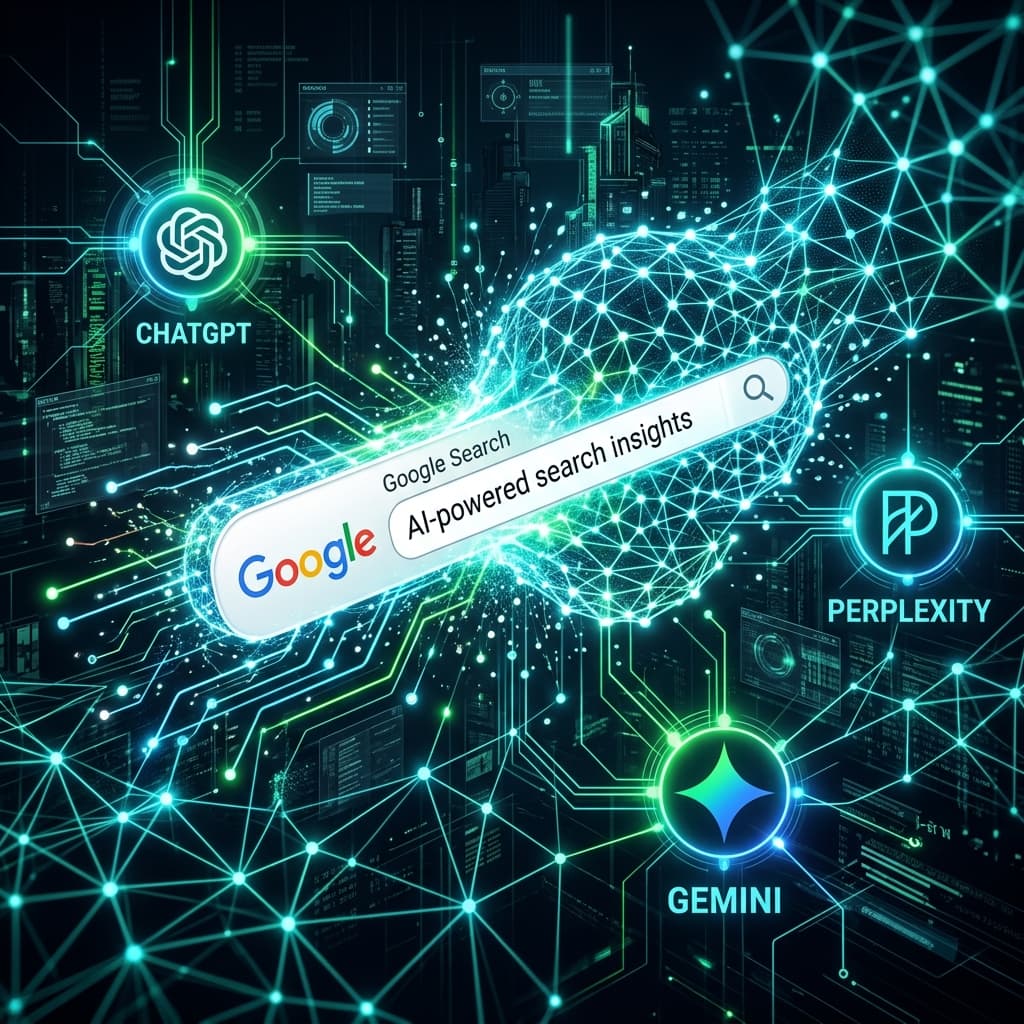

B2B buyer behavior is shifting silently but radically. For the past fifteen years, the routine of any operations manager, procurement head, or CEO looking for a new technology provider was highly predictable: go to Google, type in three or four keywords, open the first five tabs, and start filtering.
In 2026, that routine is dying.
Today, the decision-making process starts "upstream," inside the chat input box of tools like ChatGPT, Gemini, and Perplexity. Searches are no longer fragmented lists of keywords; they are complex, contextual questions: "I need to integrate an inventory automation system that is compatible with Holded, strictly complies with GDPR, and offers technical support in Spanish. Compare the top 3 options on the market and break down their costs."
When a user asks this type of question, Google no longer holds exclusive control over visibility. Control belongs to the language model that synthesizes the response, cites the sources, and writes the recommendation.
If your company's information is not structured to be crawled and interpreted by these generative engines, your business is practically invisible. This is what defines Generative Engine Optimization (GEO)—the inevitable evolution of traditional SEO.
From SEO to GEO: How the Rules Have Changed
In classic SEO, the goal was to please an indexing algorithm focused on keyword density, page speed, and backlink authority. In GEO, the goal is to feed and train language models so they identify your brand as the undisputed authority in your niche.
The difference is structural:
- Google looks for technical relevance: The traditional search engine shows you a list of links so you can do the reading and comparison yourself.
- AI looks for semantic consensus: Generative AIs read thousands of web pages, forums, and databases, synthesize the findings, and deliver a recommended verdict. If your website data is ambiguous, contradictory, or locked behind a contact wall, the AI will simply ignore you.
This is not a future projection. As we saw in our analysis of Grok 4.5's impact, autonomous agents are already capable of making independent vendor pre-selection decisions, using these semantic search engines to build candidate shortlists before a human rep ever steps in.
4 Practical Steps to Optimize Your Website for AI Traffic
If you want the LLMs from Anthropic, Google, and OpenAI to recommend your services to high-value clients, you must adapt your website's data structure following these guidelines:
1. Data Transparency and Semantic Structuring
AI web crawlers (like OpenAI's GPTBot or Anthropic's Anthropic-control) dislike ambiguity. If your pricing, delivery windows, or technical specs are vague or hidden behind corporate marketing jargon ("we offer global synergistic solutions"), the AI will fail to parse them.
- Use clear tables and lists: LLMs love structured data. Detailing your services in comparison tables with exact numerical values increases the likelihood of being cited in comparative summaries by 40%.
- Advanced JSON-LD and Schema markup: Implement rich structured data (Schema.org) in your website code, tagging every product, service, pricing tier, and physical location accurately.
2. The Reputation Factor: Footprint Beyond Your Website
AIs do not just read your official website to evaluate your quality; they cross-reference that data with external sentiment.
- AI looks for consensus: If your website claims you are the top CRM integration service but there is no mention of your brand on communities like Reddit, GitHub, or specialized forums, the model will detect the inconsistency and skip your business.
- Semantic PR: Modern SEO is no longer about buying backlinks on newspaper sites to boost Domain Authority (DA). It is about generating organic mentions on forums, third-party blogs, and specialized databases where language models are trained.
🔒 Want to audit your business's visibility in next-generation AI search engines?
GEO requires clean data infrastructure, open APIs, and semantically perfect code. At IA4PYMES, we redesign your web presence and structure your data to ensure that your clients' AI assistants find and recommend your services.
Book your 60-minute technical consultation here (100% refundable if we don't validate project feasibility in the first 15 minutes, or fully credited against final development costs on hire).
3. Adapt Your Content to Conversational Queries
Instead of writing content optimized for dry keywords like "AI consulting Madrid," start answering the exact business questions an executive would type into a chat.
- Write comprehensive, detailed FAQ sections.
- Use a clear heading hierarchy (H1, H2, H3) that raises direct business questions and answers them concisely in the very first paragraph. AIs seek direct answers to extract as quick citations.
4. Keep Your Doors Open to AI Crawlers
Many companies, out of fear of their content being used to train LLMs, block all web scrapers in their robots.txt files. If you block GPTBot or PerplexityBot, you guarantee that your business will not exist in their conversational search results. Unless you are hosting highly confidential intellectual property, keep your doors open to semantic search crawlers.
Conclusion
GEO does not replace traditional SEO; it complements it. Users will still search Google for quick, local tasks, but high-value B2B purchasing decisions are moving to conversational AI environments.
Preparing your website to be "read and recommended" by AIs is not a marketing experiment; it is the key to remaining visible in your market over the next five years. Leave keyword stuffing behind and start optimizing for the age of synthetic intelligence.