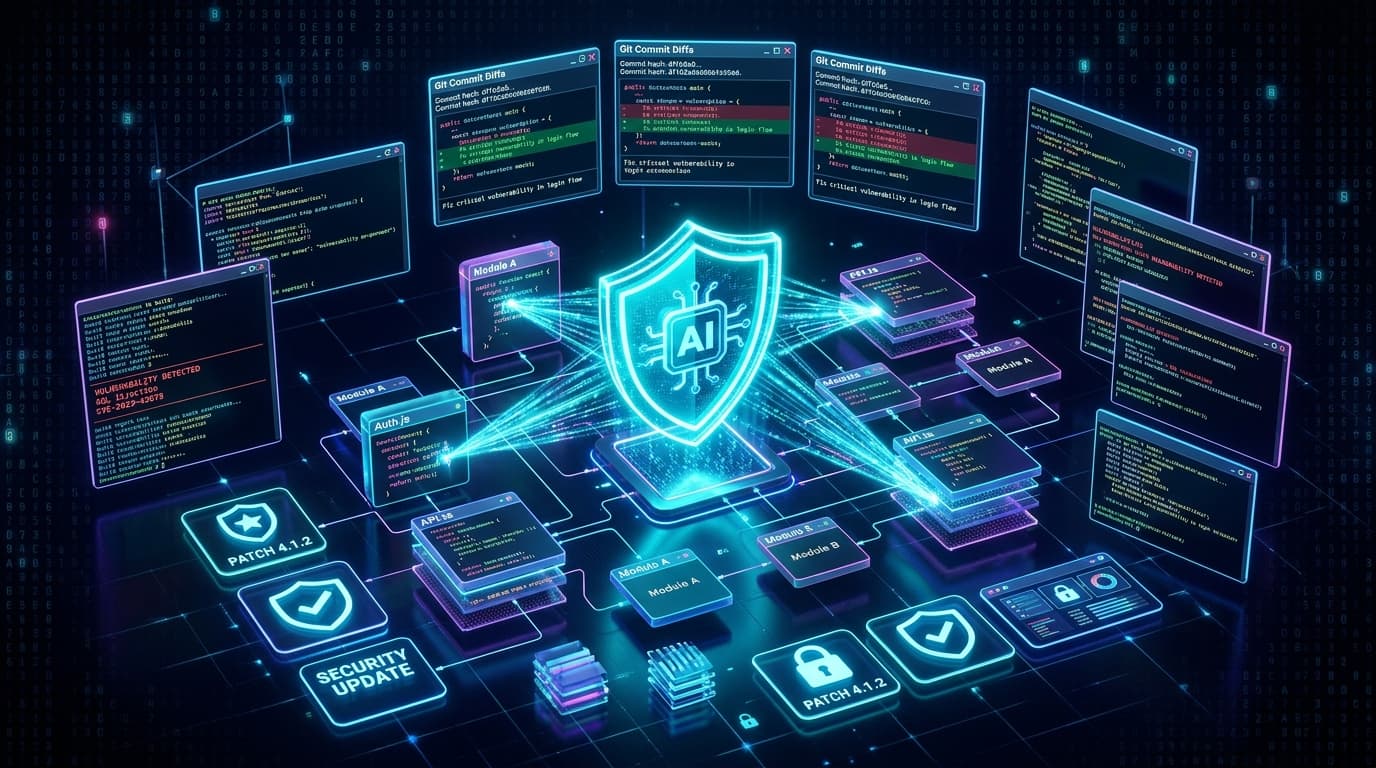

OpenAI has officially open-sourced openai/codex-security on GitHub under the Apache-2.0 license. The tool includes a CLI client and a TypeScript SDK designed to transform enterprise application security auditing (AppSec).
Unlike traditional static analysis security testing (SAST) tools reliant on rigid regular expression rules, Codex Security operates as an autonomous scanning and remediation agent: it constructs a project-specific threat model, traces cross-file data flows (taint analysis), confirms exploitability in isolated sandbox environments, and generates verified code patches before deployment.
We examine the technical architecture of openai/codex-security, detail its CLI and CI/CD integration, and outline how enterprise SMEs can run sovereign vulnerability scanning pipelines while protecting proprietary source code.
Technical Shift: Traditional SAST vs. Agentic Code Analysis
Conventional static analyzers (such as SonarQube or Semgrep) inspect isolated syntax patterns. This approach generates a high volume of false positives that burdens engineering teams.
Codex Security introduces an iterative three-stage agentic workflow:
- Context-Aware Threat Modeling: The agent maps project architecture, exposed API routes, authentication flows, and third-party dependencies.
- Sandbox PoC Verification: Before flagging a vulnerability, the agent attempts to generate and execute a dynamic proof-of-concept test in a sandboxed container to confirm exploitability.
- Verified Patch Generation: When a vulnerability is confirmed, the agent drafts a precise code patch (Pull Request) and runs the project's existing test suite to ensure the fix preserves business logic.
Technical Specifications: OpenAI Codex Security (openai/codex-security)
| Parameter / Module | Technical Specification |
|---|---|
| Official Repository | github.com/openai/codex-security |
| Software License | Apache-2.0 (CLI & TypeScript SDK) |
| Execution Interfaces | Command-line CLI, Node.js/TypeScript SDK, GitHub Actions |
| Analysis Engine | Multi-file agentic analysis with cross-file data flow tracing |
| Output Formats | Terminal interactive reports, JSON, and standard SARIF files |
| Dynamic Validation | Simulated exploit execution within isolated sandbox containers |
| Reasoning Model | Codex model family / OpenAI API endpoints |
Installation and Usage Guide: Codex Security CLI
To audit a local software repository with codex-security, execute the CLI using Node.js:
1. Installation & Environment Setup
# Install the global CLI package via npm
npm install -g @openai/codex-security

# Export API key (or routed private endpoint)
export OPENAI_API_KEY="sk-proj-..."
2. Executing a Repository Security Scan
# Execute full agentic scan with SARIF output
codex-security scan ./src \
  --output-format sarif \
  --output-file security-audit.sarif \
  --auto-patch false \
  --sandbox-isolation strict
3. CI/CD Pipeline Integration (GitHub Actions)
Codex Security can automatically block pull requests containing critical vulnerabilities:
name: Continuous Security Audit
on:
  pull_request:
    branches: [ main ]

jobs:
  codex-security-audit:
    runs-on: ubuntu-latest
    steps:
      - uses: actions/checkout@v4
      - uses: actions/setup-node@v4
        with:
          node-version: 20
      - name: Install Codex Security
        run: npm install -g @openai/codex-security
      - name: Run Agentic Vulnerability Scan
        env:
          OPENAI_API_KEY: ${"{{ secrets.OPENAI_API_KEY }}"}
        run: |
          codex-security scan . --fail-on critical --output-format sarif --output-file audit.sarif
      - name: Upload SARIF report to GitHub Security tab
        uses: github/codeql-action/upload-sarif@v3
        with:
          sarif_file: audit.sarif
Data Privacy and EU Compliance Challenges (August 2026)
While the CLI tool is open-source, agentic vulnerability scanning requires sending code snippets, database schemas, and execution traces to cloud API endpoints for processing.
For European enterprises preparing for the EU AI Act Countdown by August 2026 and NIS2 directives, streaming proprietary source code to external third-party APIs creates data leakage and intellectual property risks.
Sovereign Architecture: Running Codex Security with Local LLMs
To preserve complete source code confidentiality without sacrificing agentic auditing, IA4PYMES integrates the codex-security framework with private infrastructure:
- Endpoint Rerouting: Configure the
codex-securitySDK to route analysis requests to private on-premise GPU inference servers. - Specialized Open Models: Utilize high-capacity open coding models such as Qwen 3.6 Coder or self-hosted instances of Kimi K3 2.8T parameters.
- Isolation Gateway: Filter model invocations through our Executor.sh MCP Gateway, protecting agent memory against FARMA episodic memory poisoning attacks.
📊 Code Auditing Cost Comparison:
- Traditional External Audit: €4,000 to €12,000 per manual security scan with multi-week delays.
- Sovereign Agentic Pipeline (Codex Security + Private GPU): Continuous auditing on every git commit in under 3 minutes with zero third-party token fees. 90% reduction in software audit overhead.
🔒 Deploy an Autonomous and Private Code Security Pipeline
Safeguard your software applications without exposing your proprietary source code to external servers or being bound by closed platform policies like those outlined in Anthropic's stance on open weights. At IA4PYMES, we architect and deploy sovereign agentic auditing pipelines for your enterprise.
Book your 60-minute technical consultation here (100% refundable or credited against final development costs).
Technical Resources and References
- Official GitHub Repository: openai/codex-security
- Agent Governance: Read our technical guide on the Executor.sh MCP Gateway for AI agents.